
We provide independent regulatory data analysis for cannabis data.
Canndata helps regulators understand their data, why patterns may be occurring, and proposes actionable steps forward.
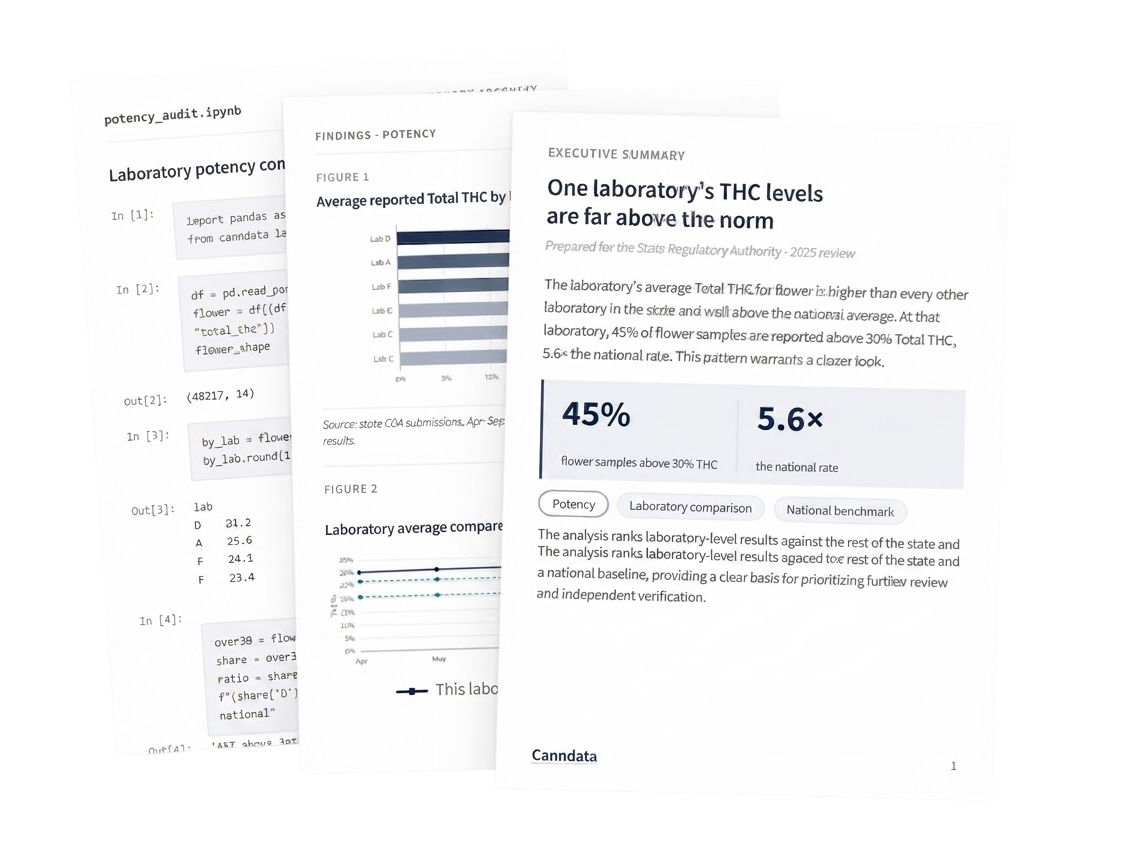
Cannabis regulators need a clearer read of the data.
States collect extensive testing and market data. Those records can reveal patterns that are difficult to see from individual results, complaints, inspections, or market anecdotes alone.
Most legal cannabis markets already know there are problems worth addressing. The challenge is understanding what those problems are, why they are occurring, and which responses are most likely to be effective.
Canndata reports provide clarity.
Executive summary
The major findings and recommended next steps, in brief.
Full report
The charts, analysis, and regulatory context in full.
Code used to produce the analysis
The code behind every number, so the work can be checked and reproduced.
The report can examine testing, markets, and policy effects.
Each report is shaped by the state's data and oversight needs.
Testing patterns
- Potency
- Contaminants
- Lab-level results
Market dynamics
- Inversion
- Product-category shifts
- Medical-market decline
Policy effects
- Implemented changes
- Proposed changes
- Modeling against other states
Canndata helps regulators move from concern to response.
The goal is to make market patterns visible, interpret them carefully, and support practical oversight decisions.
A Canndata report is designed to help regulators understand what the data shows, what the data does not establish, and what response is proportionate.
Need help with the cannabis data your state collects?
For a first conversation about a twice-per-year regulatory data report, contact Canndata.